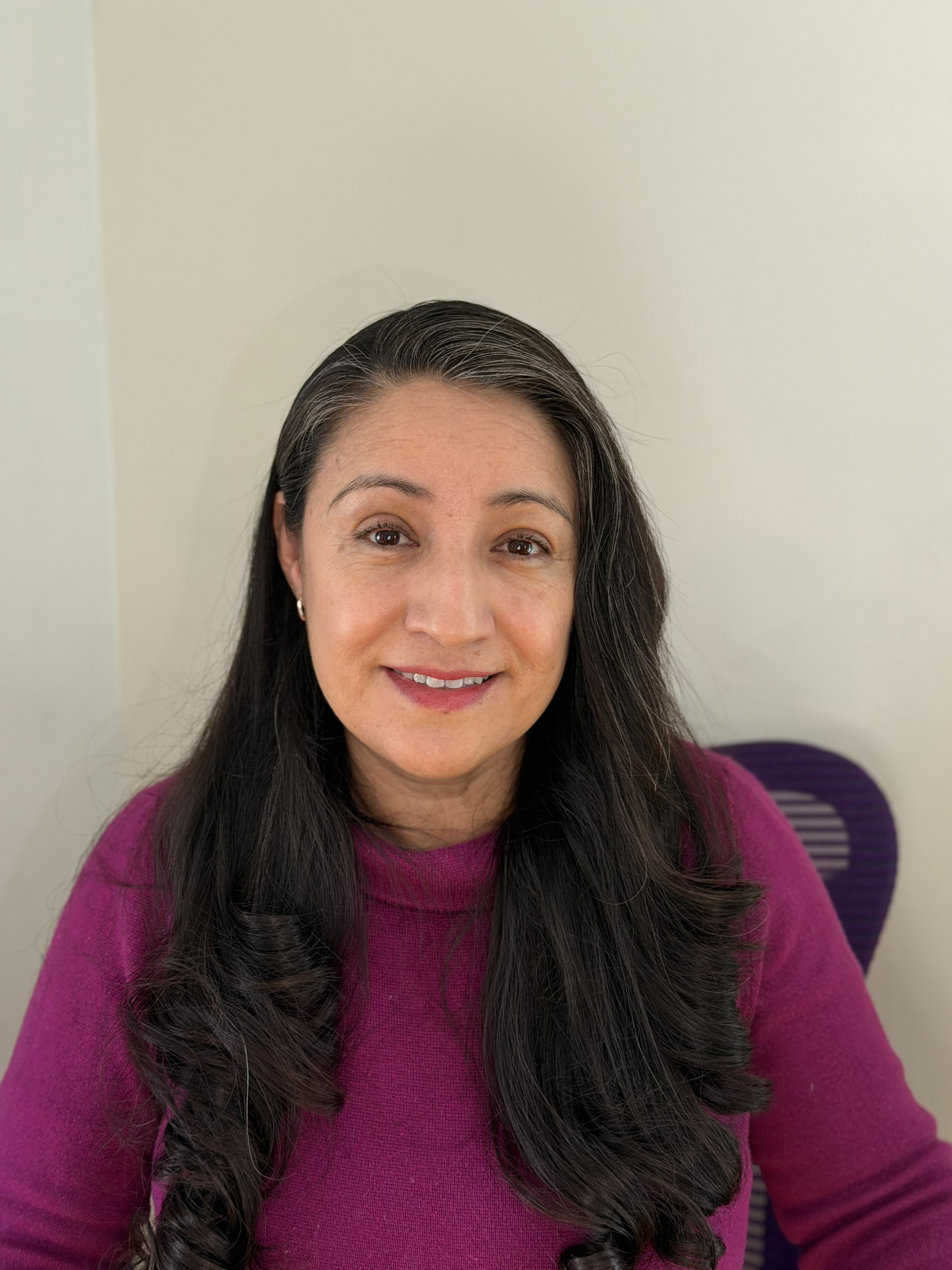
When Angélica Farfan decided to study dentistry in Iztapalapa, a borough of Mexico City, she was 13 years old. She did not come from a family of doctors, but one day, while walking to school, she passed a dental office and realized that was what she wanted to do. Years later, she graduated from the National Autonomous University of Mexico with the Gabino Barreda Medal, an award given to the highest-ranking student of a graduating class. She later opened and managed two dental offices in Mexico. Her professional trajectory seemed stable. However, after emigrating to the United States, she left behind that structure and reputation.
“I came with what I was wearing,” Angélica recalls. Upon arriving in the Hudson Valley, she found herself in a reality common to many immigrants: her credentials were not recognized. She began working as a dental assistant. During the first few months, she was not aware that her salary was lower than that of other employees, despite having more advanced training in dentistry. Even so, she continued working there until the end of her contract, explaining that she had “given [her] word to stay six months and kept it.”
The transition required a significant adjustment. Going from running her own practices to holding an assistant position and doing work similar to someone with a doctoral degree. This meant rethinking her professional identity. Over time, she found better opportunities within the same field, though she acknowledges that the process was not easy.
Farfan settled in Newburgh with her husband and daughter, and one of the things she values most about living there is the community they have built and access to public resources such as libraries. It was in this environment that she began learning about local programs and educational opportunities. Among those resources, she found La Voz, a Spanish-language community newspaper circulating in the Hudson Valley. Through its pages, she learned about different initiatives, from the
Clemente Course, to cultural activities like
theater classes. What caught her attention most, however, was a business administration program offered entirely in Spanish by
SUNY Empire State University.
“I saw it and thought: this is for me,” she says. That same night, she began the application process. For Farfan, returning to school and not to continue dentistry but to study business was not a career change, but a way to better understand the system in which she now works in. Her long-term goal is to open a clinic that primarily serves immigrant communities, one that truly prioritizes patient health rather than focusing on economic or cultural background.
Throughout her work experience in the United States, she has observed important differences between the healthcare systems here and in Mexico. She notes that insurance plays a significant role in treatment decisions, which, in her view, can sometimes shift the focus away from strictly clinical considerations. She also points out that language remains a barrier in many professional settings. At times, she has served as an interpreter between patients and healthcare providers. “Language affects how people perceive you,” Angélica says.
Studying in Spanish has allowed her to regain academic confidence and participate more fully. For her, access to educational programs in her native language is not a step backward, but a strategy for moving forward within her current context.
Farfan believes that many immigrant professionals face similar challenges: lack of information about available resources, limited guidance on credential validation, and insufficient access to information in Spanish. In that sense, she highlights the role of community media like La Voz in sharing opportunities that do not always reach Latino communities through other channels.
“If I hadn’t read it there, I might not have found out,” she says about the university program. Today, she balances work, studies, and family responsibilities. She does not describe her journey as easy or linear. Instead, she speaks about adjustments, moments of uncertainty, and practical decisions.
Her story is not one of starting from zero, but of a professional reorganizing her path in a new country.
Resources:For information about validating and transferring professional credentials:
https://www.wes.org/To learn more about college courses in Spanish at SUNY Empire State University:
sunyempire.edu/spanish or call (845) 687-5022
For more information about the Clemente Course, visit our article:
https://lavoz.bard.edu/articles/index.php?id=1209422To explore past activities, such as theater classes, visit our archive:
https://lavoz.bard.edu/archivo/article.php?id=1209326 back to top
COPYRIGHT 2026
La Voz, Cultura y noticias hispanas del Valle de Hudson