Bard College Catalogue 2008-2009

September 1, 2008:

The Bard College Catalogue is published by the Bard Publications Office.

Postmaster: Send address changes to Bard College Catalogue, PO Box 5000, Bard College, Annandale-on-Hudson, NY 12504-5000.

Bard College
PO Box 5000
Annandale-on-Hudson, NY 12504-5000

Phone: 845-758-6822
Website: www.bard.edu
E-mail: [email protected]

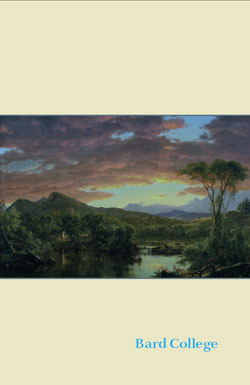
Cover Art: A Country Home
Frederic Edwin Church, American, 1826–1900
1854
Oil on canvas
32 x 51 in. (81.3 x 129.5 cm)
Seattle Art Museum, Gift of Mrs. Paul C. Carmichael, 65.80
Photo: Paul Macapia


Be advised that the provisions of this catalogue are not to be regarded as an irrevocable contract between the student and Bard College or its officers and faculty. The College reserves the right to make changes affecting admission procedures, tuition, fees, courses of instruction, programs of study, faculty listings, academic grading policies, and general regulations. The information in this catalogue is current as of publication, but is subject to change without notice.

Educational Rights and Privacy Act
Bard College complies with the provisions of the Family Educational Rights and Privacy Act of 1974. This act assures students attending a postsecondary educational institution that they will have the right to inspect and review certain of their educational records and, by following the guidelines provided by the College, to correct inaccurate or misleading data through informal or formal hearings. It protects students’ rights to privacy by limiting transfer of these records without their consent, except in specific circumstances. Students have the right to file complaints with the Family Educational Rights and Privacy Office, U.S. Department of Education, Washington, D.C. College policy relating to the maintenance of student records is available upon request from the Office of the Registrar.

Notice of Nondiscrimination
Bard College does not discriminate in education, employment, admission, or services on the basis of sex, sexual orientation, race, color, age, religion, national origin, or handicapping conditions. This policy is consistent with state mandates and with governmental statutes and regulations, including those pursuant to Title IX of the Federal Educational Amendments of 1972, Section 504 of the Federal Rehabilitation Act of 1973, Title VI of the Civil Rights Act of 1964, and the Americans with Disabilities Act of 1990. Questions regarding compliance with the above requirements and requests for assistance should be directed to the Vice President for Administration, Bard College, PO Box 5000, Annandale-on-Hudson, NY 12504-5000.

Anti-hazing
Any action or situation that recklessly or intentionally endangers mental or physical health or involves forced consumption of liquor or drugs for the purpose of initiation into or affiliation with any organization of Bard College is expressly prohibited. In the event that any organization at Bard College shall authorize such conduct, permission for that organization to operate on campus property shall be rescinded. Such rescission shall be in addition to any penalty pursuant to the criminal law or any other law of the State of New York. This statement has been adopted by the Board of Trustees of Bard College.

Accreditation
Bard College is accredited by the Commission on Higher Education of the Middle States Association of Colleges and Schools. The courses of study leading to the bachelor of arts, bachelor of music, and bachelor of science degrees at Bard are registered by the New York State Education Department. The programs of study leading to the master of arts, master of arts in teaching, master of fine arts, master of music, and master of science in environmental policy degrees and the doctor of philosophy degree in the history of the decorative arts, design, and culture at Bard are registered by the New York State Education Department, Office of Higher Education, State Education Building, 2nd Floor West Mezzanine, Albany, NY 12234; phone: 518-474-3862.

Bard is also a member of the Association of American Colleges, the College Entrance Examination Board, the American Council on Education, the Union for Experimenting Colleges and Universities, the Associated Colleges of the Mid-Hudson Area, and the Educational Records Bureau.


History of Bard


Historical Timeline


Bard College was founded, as St. Stephen’s College, in 1860, a time of national crisis. While there are no written records of the founders’ attitude toward the Civil War, a passage from the College’s catalogue of 1943 applies also to the time of the institut [...]


History of Bard

Presidents of Bard College


Presidents of Bard College, 1860–2007*

George Franklin Seymour1860–1861 Thomas Richey 1861–1863 Robert Brinckerhoff Fairbairn 1863–1898 Lawrence T. Cole 1899–1903 Thomas R. Harris 1904–1907 William Cunningham Rodgers 1909–1919 [...]
 

Calendar


Calendar


Summer 2008

August 9, Saturday
Arrival date and financial clearance for first-year students

August 10, Sunday
Orientation for first-year students

August 11, Monday –August 27, Wednesday
Workshop in Language and Thinking and orientation activities for f [...]


Learning at Bard


Learning at Bard


The first order of business in college is to figure out your place in the world and in your life and career. College life starts with introspection, as opposed to a public, collective impetus. We try to urge students to think about their place in the world and to develop a desire to participate f [...]


Learning at Bard

The Curriculum


Academic Courses
The undergraduate curriculum creates a flexible system of courses that gives coherence, breadth, and depth to the four years of study and helps students become knowledgeable across academic boundaries and able to think critically within a discipline or mode of thought.
[...]
 

Learning at Bard

Academic Requirements and Regulations


Bachelor's Degree Requirements
Candidates for a bachelor of arts degree from Bard must meet the following requirements:

1. Completion, by entering first-year students, of the two-semester First-Year Seminar. A student who enters in the second semester of the first year must complete [...]
 

Academic Programs


Programs and Divisions


The following programs are currently offered. Undergraduate students earn a B.A. degree in one of four academic divisions: The Arts; Languages and Literature; Science, Mathematics, and Computing; or Social Studies. Students who undertake an interdivisional academic program receive a degree in one [...]


Academic Programs

Program Requirements


Program Requirements

The requirements for moderation and graduation differ from program to program within the home divisions and are summarized in the progra [...]


Division of Social Studies


Division of Social Studies


The Division of Social Studies offers concentrations in the areas of anthropology, economics, economics and finance, environmental studies, history, philosophy, political studies, psychology, religion, social s [...]


Division of Social Studies

Anthropology


Anthropology is a comparative and humanistic social science with an emphasis on social and cultural theory and ethnography. The discipline is based on long-term fieldwork, and an engagement and critique of Western theory and practice. The study of local communities in interaction with national [...]
 

Division of Social Studies

Economics


Adam Smith (1776) defined “political economy” as the science of “the nature and causes of the wealth of nations.” The basic methodological approach of economics is to analyze the ubiquitous problem of human choice among alternative uses of limited resources. Economics examine [...]
 

Division of Social Studies

Economics and Finance


The Bard Program in Economics and Finance, established in the fall of 2007, is a five-year B.S./B.A. dual-degree program. Students receive both a B.S. degree in Economics and Finance and a B.A. degree in one of four academic divisions: the Arts; Languages and Literature; Sciences, Computing, and Mat [...]
 

Division of Social Studies

Environmental Studies


Environmental studies begins with the recognition that our planet’s long-term prospects depend crucially on how we negotiate the tension between human needs and the intricate systems of the biosphere. No single discipline is sufficiently broad to provide an adequate understanding of the interac [...]
 

Division of Social Studies

Historical Studies


The Historical Studies Program emphasizes the importance of time and place in reconstructing the human past in its diversity and multiplicity. The program focuses primarily, but not exclusively, on political, social, economic, and cultural aspects of history. It seeks to develop in students an under [...]
 

Division of Social Studies

Philosophy


The philosophy curriculum is designed to provide every student with the opportunity to obtain a general understanding of the nature and history of philosophical inquiry. Students concentrating in philosophy have extensive access to a more specialized curriculum, which can serve as the foundation for [...]
 

Division of Social Studies

Political Studies


Politics can be understood in many ways: as a struggle for power over other people and nations, or for freedom from control; as a social process that determines who has what kinds of authority; as a series of conversations or disputations about what counts as a “public problem” and how to [...]
 

Division of Social Studies

Psychology


Psychology has firmly established itself as a core human science in the 21st century. The science of psychology is a quest to understand the human mind and behavior. Bard psychology faculty and students seek to answer questions about the workings of the brain; the interactions of brain, mind, and be [...]
 

Division of Social Studies

Religion


Religious ideas and practices have been crucial in shaping distinctive human societies throughout history, and they continue to exercise critical influence in the world of the 21st century. We study the various phenomena we call “religion” for many reasons: for their intrinsic interest; to [...]
 

Division of Social Studies

Social Studies


Courses listed under this heading are interdisciplinary in nature and thus cross a number of programs within the Division of Social Studies.

Latinos in the U.S.A.:Film, Memoir, Fiction
Social Studies 140 / LAIS 140
An introduction to the history a [...]
 

Division of Social Studies

Sociology


Sociology at Bard aims to provide an understanding of the structure and processes of society, explain and chart the course of social changes, and offer knowledge of the sources of those actions and ideas that are learned and shared through social membership. While contemporary complex societies are [...]
 

Division of Languages and Literature


Division of Languages and Literature


For many Bard students, the study of English and American literature and world literature in translation is the central focus of their work. They explore literature within special periods such as medieval or Renaissance Europe, relations among national literatures in forms such as lyric poetry or [...]


Division of Languages and Literature

Literature


Literature

The study of literature at Bard is distinctive in its unusual flexibility and breadth. English, U.S., and world literatures in translation are central, as are criticism and the theory of literature, which deepen awareness of literature as an aesthetic and cultural activity. [...]
 

Division of Languages and Literature

Writing Program in Fiction and Poetry


Writing Program in Fiction and Poetry

At Bard, writing is dealt with as a process that engages the student in an ardent investigation of the nature and varieties of art, so that the student’s own work is understood in the context of the arts of the present and past. The caref [...]
 

Division of Languages and Literature

Foreign Languages, Cultures, and Literatures


Foreign Languages, Cultures, and Literatures
Foreign Languages, Cultures, and Literatures comprises a number of programs based on the foreign languages currently taught at Bard: Arabic, Chinese, French, German, Hebrew, Italian, Japanese, Russian, Spanish, Ancient Greek, and Latin. These pro [...]
 

Division of the Arts


Division of the Arts


The Division of the Arts offers concentrations in the areas of studio arts, art history, dance, film and electronic arts, music, photography, and theater. Theory and practice are taught in all disciplines within the arts. Theoretical understanding and practical skills [...]


Division of the Arts

Studio Arts


In an era when much contemporary art cannot be contained within the traditional categories of painting and sculpture, and when technology is transforming the production of visual images, the Studio Arts Program at Bard has expanded the breadth of its offerings while re [...]


Division of the Arts

Art History


The Program in Art History offers the opportunity to explore visual art and culture through courses across a broad range of periods and societies, and through close student-teacher contact. The program emphasizes learning how to look at and write about works of art, pa [...]


Division of the Arts

Dance


Through intensive technique and composition courses, onstage performance, and production experience, the Dance Program prepares students to understand and practice the art of choreography and performance.

The program offers courses in modern dance technique (styles [...]


Division of the Arts

Film and Electronic Arts


Critical thinking and creative work go hand in hand in the Film and Electronic Arts Program, which integrates various creative practices with the study of theory and criticism. For example, all filmmaking majors take courses in film history and video production, and a student [...]


Division of the Arts

Music


Performance, composition, and historical analysis are the primary focuses of the Bard Music Program. Students develop their talents as performers through lessons and in large and small ensembles. In addition to weekly rehearsals with an ensemble and in open concerts offered [...]


Division of the Arts

Photography


A photographer’s growth is the product of the simultaneous development of three interdependent factors. The first is the conscious or intuitive understanding of the visual language of photography—that is, how the world is translated into a photograph and how a [...]


Division of the Arts

Theater


The Theater Program is grounded in the belief that theater is a fundamental cultural necessity that enriches all who participate in it.

The program emphasizes the practical and the theoretical; technique and practice; and the knowledge of dramatic literature, [...]


Division of the Arts

Integrated Arts


Integrated arts  is a relatively new program that is still evolving. It offers Upper College students an opportunity to work creatively in two or more related arts fields or in a particular art form that defies traditional categorization. The program offers courses that [...]


Division of Science, Mathematics, and Computing


Division of Science, Mathematics, and Computing


In the Division of Science, Mathematics, and Computing, progressive and classical curricular elemen [...]


Division of Science, Mathematics, and Computing

Biology


In order to meet the needs and interests of ­students within this diverse field, the biology cu [...]


Division of Science, Mathematics, and Computing

Chemistry


Chemistry at Bard is geared primarily, but not exclusively, to meeting the needs of students p [...]


Division of Science, Mathematics, and Computing

Computer Science


The Computer Science Program at Bard offers courses of interest to computer science, science [...]


Division of Science, Mathematics, and Computing

Mathematics


Mathematics is at the core of human civilization and is the cornerstone of all modern scienc [...]


Division of Science, Mathematics, and Computing

Physics


The Physics Program provides a firm foundation for work in a variety of areas, including gra [...]


Division of Science, Mathematics, and Computing

Additional Courses in the Sciences


Courses listed under this heading are introductory courses in branches of science that do no [...]


Division of Science, Mathematics, and Computing

Historical and Philosophical Courses in the Sciences


The courses listed under this heading approach the study of science from a historical or philosophic [...]


Interdivisional Programs and Multidisciplinary Studies


Africana Studies


Africana Studies

Core faculty: Amy Ansell (director), Susan Aberth, Chinua Achebe, Christie Chinwe Achebe, Elizabeth T. Antrim, Myra Young Armstead, Thurman Barker, Mario J. A. Bick, Diana De G. Brown, Tabetha Ewing, Donna Ford Grover, John Ryle, Yuka Suzuki, Binyavanga Wainaina, [...]
 

Interdivisional Programs and Multidisciplinary Studies

American Studies


American Studies
 
Core faculty: Geoffrey Sanborn (director), Amy Ansell, Myra Young Armstead, Elizabeth T. Antrim, Thurman Barker, Christian Ayne Crouch, Yuval Elmelech, Elizabeth Frank, Donna Ford Grover, Mark Lindeman, Mark Lytle, John Pruitt, Tom Wolf
 
The American [...]
 

Interdivisional Programs and Multidisciplinary Studies

Asian Studies


Asian Studies

Core faculty: Sanjaya DeSilva (director), Michiko Baribeau, Sanjib Baruah, Robert J. Culp, Richard H. Davis, Mercedes Dujunco, Patricia Karetzky, Laura Kunreuther, Hoyt J. Long, Kristin Scheible, Yuka Suzuki, Li-Hua Ying

The Asian Studies Program offers courses in [...]
 

Interdivisional Programs and Multidisciplinary Studies

Classical Studies


Classical Studies

Core faculty: Carolyn Dewald (director), Diana H. Minsky, William Mullen, James Romm, Benjamin Stevens

For the last 200 years, classics has been the study of the ancient Greek and Latin languages and the histories, literatures, and cultures that produced them. [...]
 

Interdivisional Programs and Multidisciplinary Studies

Cognitive Science


Cognitive Science

Core faculty: S. Rebecca Thomas (director), Sven Anderson, Melvin Chen, Mary Clayton Coleman, Sarah Lopez-Duran, Barbara Luka, Frank M. Scalzo, Benjamin Stevens, Michael Tibbetts

The Cognitive Science Program seeks to understand how humans, animals, and robots [...]
 

Interdivisional Programs and Multidisciplinary Studies

French Studies


French Studies

Core faculty: Eric Trudel (director), Odile S. Chilton, Emmanuel Dongala, Tabetha Ewing, Jean M. French, Justus Rosenberg, Alice Stroup, Karen Sullivan, Elaine Renee Thomas, Marina van Zuylen

The objective of the French Studies Program is twofold: [...]
 

Interdivisional Programs and Multidisciplinary Studies

Gender and Sexuality Studies


Gender and Sexuality Studies

Core faculty: Robert Weston (director), Daniel Berthold, Diana De G. Brown, Deirdre d’Albertis, Michèle D. Dominy, Tabetha Ewing, Beth S. Gershuny, Donna Ford Grover, Elizabeth M. Holt, Nancy S. Leonard, Kristin Scheible, Marina van Zuy [...]
 

Interdivisional Programs and Multidisciplinary Studies

German Studies


German Studies

Core faculty: Franz R. Kempf (director), Florian Becker, Daniel Berthold, Leon Botstein, Matthias Goeritz, William James Griffith, Garry L. Hagberg, David Kettler, Gregory B. Moynahan, Justus Rosenberg, Peter D. Skiff, Tom Wolf

The German Studies Program encompas [...]
 

Interdivisional Programs and Multidisciplinary Studies

Global and International Studies


Global and International Studies

Core faculty: Jonathan Becker (director), Amy Ansell, Sanjib Baruah, Sanjaya DeSilva, Michael Donnelly, Omar G. Encarnación, Felicia Keesing, Mark Lytle, Gregory B. Moynahan, Catherine O’Reilly, Pierre Ostiguy, Yuka Suzuki, Elaine Renee Thomas [...]
 

Interdivisional Programs and Multidisciplinary Studies

Human Rights


Human Rights

Core faculty: Thomas Keenan (director), Amy Ansell, Roger Berkowitz, Lisa Brawley, Ian Buruma, Nicole Caso, Noah Chasin, Christian Ayne Crouch, Mark Danner, Omar G. Encarnación, Laura Kunreuther, Susan Merriam, Gregory B. Moynahan, Gilles Peress, John Ryle
[...]
 

Interdivisional Programs and Multidisciplinary Studies

Irish and Celtic Studies


Irish and Celtic Studies

Core faculty: Terence F. Dewsnap (director), Deirdre d’Albertis, Michèle D. Dominy, Jean M. French, Benjamin La Farge

The Irish and Celtic Studies (ICS)|Program is interdisciplinary, offering access to three main areas: Celtic traditions in [...]
 

Interdivisional Programs and Multidisciplinary Studies

Italian Studies


Italian Studies

Core faculty: Joseph Luzzi (director), Nina Cannizzaro, Frederick Hammond

Nearly every area of instruction at Bard|including the sciences|recognizes in its course offerings the central importance of the Italian contribution to civilization. Italian culture is u [...]
 

Interdivisional Programs and Multidisciplinary Studies

Jewish Studies


Jewish Studies

Core faculty: Cecile E. Kuznitz (director), Mario J. A. Bick, Leon Botstein, Bruce Chilton, Yuval Elmelech, Elizabeth Frank, Norman Manea, Jacob Neusner, Joel Perlmann, Justus Rosenberg

The Jewish Studies Program takes an interdisciplinary approach to exploring [...]
 

Interdivisional Programs and Multidisciplinary Studies

Latin American and Iberian Studies


Latin American and Iberian Studies

Core faculty: Melanie Nicholson (director), Susan Aberth, Mario J. A. Bick, Diana De G. Brown, Gabriela Carrión, Nicole Caso, Omar G. Encarnación, Susan Merriam, Pierre Ostiguy

Latin American and Iberian Studies (LAIS) is a multi [...]
 

Interdivisional Programs and Multidisciplinary Studies

Medieval Studies


Medieval Studies

Core faculty: Karen Sullivan (director), Jean M. French, Mark Lambert, Nancy S. Leonard, Alice Stroup

The Medieval Studies Program exposes students to the medieval civilizations of Europe and the Middle East through a range of disciplines including art history, [...]
 

Interdivisional Programs and Multidisciplinary Studies

Middle Eastern Studies


Middle Eastern Studies

Core faculty: Joel Perlmann (director), Yuval Elmelech, Elizabeth M. Holt, Jeffrey T. Jurgens, Youssef Yacoubi

The Middle Eastern Studies (MES) Program promotes the intellectual exploration and analytic study of the formation and evolution of the historic [...]
 

Interdivisional Programs and Multidisciplinary Studies

Russian and Eurasian Studies


Russian and Eurasian Studies

Core faculty: Gennady L. Shkliarevsky (director), Jonathan Becker, Jennifer Day, Marina Kostalevsky

The Russian and Eurasian Studies Program (RES) focuses on the language, literature, history, and culture of Russia, the Soviet Union and the now-inde [...]
 

Interdivisional Programs and Multidisciplinary Studies

Science, Technology, and Society


Science, Technology, and Society

Core faculty: Gregory B. Moynahan and Peter D. Skiff (directors), Bob Bielecki, Diana De G. Brown, Laurie Dahlberg, Sanjaya DeSilva, Jacqueline Goss, Felicia Keesing, Alice Stroup

The interrelation of scientific and technological systems with s [...]
 

Interdivisional Programs and Multidisciplinary Studies

Social Policy


Social Policy

Core faculty: Yuval Elmelech (director), Sanjaya DeSilva, Michael Donnelly, Kris Feder, Tamar Khitarishvili, Mark Lindeman, Dimitri B. Papadimitriou, Andrew Pearlman, Joel Perlmann, Elaine Renee Thomas, Tsu-Yu Tsao

Many Bard students are strongly imbued with a des [...]
 

Interdivisional Programs and Multidisciplinary Studies

Studies in Race and Ethnicity


Studies in Race and Ethnicity

Core faculty: Amy Ansell (director), Myra Young Armstead, Mario J. A. Bick, Geoffrey Sanborn, Yuka Suzuki, Elaine Renee Thomas, Charles A. Walls

Although it is possible today to celebrate the existence of a “postracial” world, many would [...]
 

Interdivisional Programs and Multidisciplinary Studies

Theology


Theology

Core faculty: Bruce Chilton (director), Daniel Berthold, Richard H. Davis, Elizabeth Frank, Robert Kelly, Nancy S. Leonard, Paul E. Murray, Jacob Neusner, Kristin Scheible, Peter D. Skiff, Karen Sullivan

The Theology Program enables its participants to explore new dire [...]
 

Interdivisional Programs and Multidisciplinary Studies

Victorian Studies


Victorian Studies

Core faculty: Deirdre d’Albertis and Terence F. Dewsnap (directors), Laurie Dahlberg, Mark Lambert, Peter D. Skiff

The interdisciplinary Victorian Studies Program guides students in their exploration of the politics, culture, and society of Britain and th [...]
 

Interdivisional Programs and Multidisciplinary Studies

Multidisciplinary Studies


Multidisciplinary Studies

The Multidisciplinary Studies Program allows a student to select an area of study or develop an individual approach to an area and then design a program that integrates material from different programs and divisions in order to pursue that study.

In or [...]
 

The Bard College Conservatory of Music


Undergraduate Program


The Bard College Conservatory of Music opened in the fall of 2005, continuing Bard’s spirit of innovation in arts and education. In a unique five-year program, all Conservatory students pursue a simultaneous dual degree, a bachelor of music and a bachelor of arts in [...]


The Bard College Conservatory of Music

Graduate Program


The Bard College Conservatory of Music’s graduate program in vocal arts leads to the M.Music degree. Up to eight students per year are enrolled in a two-year curriculum that was designed by renowned soprano Dawn Upshaw. The program includes a specially created four-s [...]


International Programs and Study Abroad

Overview of International Programs and Study Abroad


International Programs and Study Abroad

Globalization creates new opportunities for dialogue and understanding, as well as occasions for turmoil and conflict. In the age of the Internet and e-mail, satellite communications and high-speed travel, it is increasin [...]


Additional Opportunities to Learn


Specialized Undergraduate Programs


Bard Globalization and International Affairs Program (BGIA)
The Bard Globalization and International Affairs Program, located in the heart of New York City, brings together university students and recent graduates from around the world to undertake specialized study with leading practitioner [...]


Additional Opportunities to Learn

Additional Opportunities to Learn


Bard offers a number of opportunities for learning outside the formal curriculum and course structure. Students planning professional careers can concentrate in a liberal arts field and at the same time arrange their program to meet the requirements for admission to graduate or professional schoo [...]


Additional Opportunities to Learn

Professional Education


In Bard's view, the liberal arts curriculum provides the best preparation for a professional education, which is usually acquired in postgraduate study. Most graduate and professional schools know that an enhanced command of language and capacity to reason developed in the undergraduate years inc [...]


Additional Opportunities to Learn

Independent Work


Independent Study Projects
Regular Bard academic credit may be awarded for successful completion of an independent study project outside the College's regular course structure, provided the project has demonstrated academic value. After a proposed project has been approved by a faculty spons [...]


Additional Opportunities to Learn

Study at Another Academic Institution in the United States


Academic credit may be awarded to a student who successfully completes courses at another college or university in the United States. Students who wish to obtain full credit must submit an application to the registrar before taking such courses. For courses taken during the summer or the January [...]


Additional Opportunities to Learn

Human Rights Project


The Human Rights Project enables students to learn about, and engage in, the contemporary human rights movement. The Project is interdisciplinary and humanities based. It focuses on the philosophical foundations and political mechanisms of human rights and maintains a special interest in freedom [...]


Additional Opportunities to Learn

Bard Prison Initiative


The Bard Prison Initiative is restoring higher education to the prisons of New York State. For more than 20 years, college-in-prison programs had slashed rates of reincarceration from 60 percent to less than 15 percent. They spread higher education among the most isolated communities and were the [...]


Additional Opportunities to Learn

Rift Valley Institute


The Rift Valley Institute (www.riftvalley.net) is a nonprofit research and training organization that works with communities and institutions in Eastern Africa, including Sudan and the Horn. RVI programs connect local knowledge to global information systems. They include field-based social resear [...]


Additional Opportunities to Learn

Returning to College Program


A cornerstone of Bard College's mission is a commitment to the transformative nature of a liberal arts education and the role of the liberally educated student in a democratic society. This power to transform extends to students beyond traditional college age and, for this reason, the College has [...]


Additional Opportunities to Learn

Nonmatriculated Students and Auditors


A nonmatriculated student is enrolled in a course or courses for credit, but is not a degree candidate. There are three categories of nonmatriculated student:

1. Current high school students.    Students currently enrolled in a local high school may take up to two B [...]


Additional Opportunities to Learn

Lifetime Learning Institute


Sponsored by Bard College, the Lifetime Learning Institute provides opportunities for actively retired persons to share their love of learning in a setting that fosters the exchange of ideas and experiences. The Institute is affiliated with the Elderhostel Institute Network and offers noncredit, [...]


Additional Opportunities to Learn

Bard High School Early College


The Bard High School Early College (BHSEC) Program, a trailblazing alternative to traditional high school, offers motivated young people in New York City the opportunity to embark on serious college work at age 16. In four years BHSEC students can progress from ninth grade through the first two y [...]


Additional Opportunities to Learn

Bard College at Simon's Rock: The Early College


Bard College at Simon's Rock has been a leader in the early college movement for more than 40 years and continues to distinguish itself as the only residential college in the country specifically designed to provide bright, highly motivated students with the opportunity to begin college immediate [...]


Additional Opportunities to Learn

Bard College Clemente Course in the Humanities


The Bard College Clemente Course in the Humanities provides college-level instruction, for college credit, to economically disadvantaged individuals between the ages of 17 and 45. Begun as a pilot project on the Lower East Side of Manhattan, the Clemente Course is currently in its 14th year of op [...]


College Life


Campus Facilities


Campus Facilities: Libraries

Charles P. Stevenson Jr. Library, Hoffman Library, and Kellogg Library

The library's mission is to support the goals of the College and to improve the quality of learning and teaching by providing information services and collections in a variety of formats that [...]


College Life

College Life


As a residential college, Bard provides a setting in which students can pursue their academic interests inside and outside the classroom and enjoy a rich social life that is interwoven with their cultural and intellectual pursuits. This chapter describes the facilities for various fields of study [...]


College Life

Student Activities and Services


Dean of Students Office

The Dean of Students Office (DOSO) is concerned with the quality of college life. It seeks to enhance the value of the undergraduate experience by encouraging students to participate actively in the community, be concerned about their peers, and explore personal matt [...]


College Life

Residence Life Program


On-Campus Housing

Bard's more than 50 residence halls vary considerably in architectural style, social style, and size. For example, Ward Manor is a 19th-century mansion; Gahagan is a small, cozy house; and the newer Village Dormitories offer suite-style living arrangements. Most of the res [...]


College Life

Safety and Security


Bard College provides round-the-clock, year-round safety and security coverage. The Department of Safety and Security consists of a director, an assistant director, and 15 officers. In addition, a professional dispatching staff coordinates all security communications. All safety and security offi [...]


Graduate Programs


Milton Avery Graduate School of the Arts


The Milton Avery Graduate School of the Arts, founded in 1981, offers an interdisciplinary program leading to the master of fine arts degree. For three intensive summer sessions, artists from a variety of fields live and work on the Bard campus in an environment that e [...]


Graduate Programs

Graduate Programs


In addition to its undergraduate curriculum, Bard College has nine graduate degree programs, offered at seven distinct schools or centers. Each graduate program has an interdisciplinary focus and utilizes the expertise of its select faculty and renowned visiting artist [...]


Graduate Programs

International Center of Photography-Bard Program in Advanced Photographic Studies


The International Center of Photography–Bard Program in Advanced Photographic Studies, founded in 2003, awards an M.F.A. degree in photography, in collaboration with the Milton Avery Graduate School of the Arts. The two-year program, which is based at the ICP fac [...]


Graduate Programs

Center for Curatorial Studies and Art in Contemporary Culture


The graduate program at the Center for Curatorial Studies (CCS) provides practical training and experience in a museum setting and an intensive two-year course of study in the history of the contemporary visual arts, institutions and practices of exhibition, and theory [...]


Graduate Programs

The Bard Graduate Center for Studies in the Decorative Arts, Design, and Culture


The founding of the Bard Graduate Center for Studies in the Decorative Arts, Design, and Culture (BGC) in the fall of 1993 created an institutional home for the study of the material past as a key for understanding the human creation of culture. Combining the object-ce [...]


Graduate Programs

Bard Center for Environmental Policy


The Bard Center for Environmental Policy (BCEP) was founded in 1999 to foster education, research, and public discussion on critical environmental issues. Through its academic and public programs, BCEP addresses local, national, and global policy issues pertaining to t [...]


Graduate Programs

Master of Arts in Teaching Program


The Master of Arts in Teaching (MAT) Program at Bard College was founded in 2003. The core of this yearlong program is an integrated curriculum leading to a master of arts in teaching degree and a teaching certificate for grades 7–12 in one of four areas: literat [...]


Graduate Programs

Bard College Conservatory of Music


In 2006, the Bard College Conservatory of Music opened a graduate program in vocal arts. The same year, the Conservatory became the home of the Conductors Institute, which offers a master of fine arts degree program in conducting. Information is also available at www.bard.edu [...]


Graduate Programs

The Bard College Conservatory of Music Graduate Program in Vocal Arts


The Graduate Program in Vocal Arts is a two-year master of music degree program conceived by soprano Dawn Upshaw. The course work is designed to support a broad-based approach to a singing career that extends from standard repertory to new music, as well as core semina [...]


Graduate Programs

The Conductors Institute at Bard


The Conductors Institute, now in its 10th year at Bard, offers a 15-month graduate program in addition to its summer institutes (see Conservatory chapter in this catalogue).

The M.F.A. in conducting program comprises two consecutive summer institutes and course work [...]


The Levy Economics Institute of Bard College


The Levy Economics Institute of Bard College


In 1986, the Board of Trustees of Bard Collegeestablished The Levy Economics Institute of Bard College as an autonomouslygoverned part of the College. Housed at Blithewood, a 19th-century mansion onthe Bard campus, the Levy Institute is a nonprofit, nonpartisan, public policyresearch organization [...]


The Bard Center


The Bard Center


Established in 1978, The Bard Center develops pacesetting educational and scholarly programs with a recognized nationwide impact. It promotes the study of the liberal arts and sciences as they relate to issues of public planning and decision making in and beyond the Hudson River Valley. These pro [...]


The Bard Center

Fellows of the Bard Center


Bard Center fellows, who serve active terms of varying lengths, present seminars and lectures that are open to the public and teach or direct research by Bard undergraduates. Fellows are chosen on the basis of special achievement in the arts, sciences, literature, philosophy, history, or social s [...]


The Bard Center

Institute for Writing and Thinking


In August 1981 Bard began an intensive three-week workshop for all entering students. The Workshop in Language and Thinking is aimed at helping students recognize the importance of written language as a tool for learning in all subjects. Its goals were, and continue to be, to teach the ability to [...]


The Bard Center

Bard Fiction Prize


The Bard Fiction Prize was established in 2001 and is awarded annually to an emerging writer who is an American citizen aged 39 years or younger at the time of application. In addition to a monetary award, the winner receives an appointment as writer in residence at Bard College for one semester. [...]


The Bard Center

Distinguished Scientist Lecture Series


The Distinguished Scientist Lecture Series originated in 1979 when Nobel laureate physicist Paul Dirac accepted an invitation from Dr. Abe Gelbart and The Bard Center to deliver a lecture titled "The Discovery of Antimatter." The talk presented a view of science rarely seen by the general public| [...]


The Bard Center

Intergenerational Seminars


A major goal of The Bard Center is to bring undergraduate students out of the generational isolation of the elementary and secondary years to enrich both their college experience and the experience of the community.

Intergenerational seminars are offered in the evening, with Bard students a [...]


The Bard Center

Leon Levy Endowment Fund


The Leon Levy Endowment Fund was created in 1995 by the Bard College Board of Trustees, in recognition of more than a decade of transformative philanthropy by Leon Levy. Through grants in many areas, the foundation supports Bard College's academic excellence.

The Leon Levy Scholarships are [...]


The Bard Center

Cultural Programs


The Bard Music Festival entered its 19th season in 2008. Since 1990 the festival has been presented on the Bard campus each summer over two consecutive weekends in August; in 1993, a third weekend was added, in the fall. In 2003 the festival moved into The Richard B. Fisher Center for the Perform [...]


The Bard Center

Summer Programs


The Bard Center's tradition of offering summer learning opportunities dates to 1977 and includes the Dutchess County Regional High School of Excellence. Each summer the DCRHSE provides young people from Dutchess County an opportunity to participate in challenging educational programs in a collegi [...]


Finances


Financial Aid


Through the administrationof its financial aid program, Bard College seeks to assist students andfamilies whose personal resources do not allow for total payment of the costsof attending a small private college. The College is committed to helping asmany qualified candidates as its funds will all [...]


Finances

Fees, Payment, and Refunds


Comprehensive Fee The annual comprehensive fee (for fall and springsemesters) includes the items listed in the following table. Fees in additionto the comprehensive fee are given in the next text section.

  Resident Students [...]
 

Admission


Admission


In selecting an incoming class of men and women for whom Bard is the right choice, the Admission Committee considers achievement, motivation, and intellectual ambition; appraises the standards of the secondary school curriculum; and carefully reads application essays. The committee also reviews t [...]


Scholarships, Awards, and Prizes


Scholarships


Scholarships are given tocontinuing Bard students. The John Bard Scholarships are honorary and carry nostipend. All other undergraduate scholarships are given only to students whoare eligible for financial aid.

George I. Alden Scholarship An endowed scholarship providing annual support tod [...]


Scholarships, Awards, and Prizes

Awards


Awardsare given to Bard students in open competition, irrespective of financial need.The awards carry various stipends.

Alumni/ae Research and Travel Grant Established in 1996 by the inaugural class of theBard Graduate Center to support scholarship and research for students andalumni/ae of [...]


Scholarships, Awards, and Prizes

Prizes


Prizes are given in opencompetition, irrespective of financial need, according to the intentions of thedonors. The prizes carry various stipends.

Atget Prize in Photography A prize given to a senior whose work exemplifies theessence of
artistic documentary photography

Bard Academ [...]


Faculty


Faculty Emeritus


Benjamin Boretz, The Arts
B.A., Brooklyn College; M.F.A., Brandeis University; M.F.A., Ph.D., Princeton University. Composer, critic (The Nation, 1962–70); editor (founding editor and current coeditor, Perspectives of New Music; coeditor, The Open Space Magazine). Works appear [...]


Faculty

Faculty


p>Faculty

Leon Botstein, President of the College
B.A., University of Chicago; M.A., Ph.D., Harvard University, Department of History. Lecturer, Department of History, Boston University (1969); special assistant to the president, Board of Education, City of New York (1969 [...]


Faculty

Faculty of the Bard College Conservatory of Music


Robert Martin, Director
Melvin Chen, AssociateDirector

Robert Martin, Director
Vice President for Academic Affairs, Professor of Philosophy and Music, Bard College. For complete biography, see undergraduate faculty listing.

Melvin Chen, Associate Director
[...]


Faculty

Bard High School Early College (BHSEC)


Ray Peterson, Project Director and Principal
Valeri J. Thomson, Principal, BHSEC II

Ray Peterson, Project Director and Principal
B.A., Southwestern College;M.A., University of Iowa; doctoral studies at New York University. Director,Bard College Institute for Writing a [...]


Faculty

Faculty of the Workshop in Language and Thinking


Joan Retallack, Director, Workshop in Language and Thinking
John D. and Catherine T. MacArthur Professor of Humanities, Bard College. For complete biography, see undergraduate faculty listing.

Teresa J. Vilardi, Director, Institute for Writing and Thinking
B.A., [...]


Faculty

Faculty of Graduate Programs


Bard Center for Environmental Policy

MaraRanville, Interim Director

Graduate Committee
Norton Batkin, ex officio
Jennifer Phillips
Mara Ranville
Monique Segarra
GautamSethi

Mara Ranville, Interim Director
B.A., Macalester College; Ph.D., Un [...]


Honorary Degrees and Bard College Awards


Honorary Degrees


In 1865 the Rev. Thomas A. Pynchon received the first honorary degree conferred by St. Stephen’s College, as Bard was then known. From that time until 1944, when Bard severed its relation­ship with Columbia University and became an independent liberal arts college, it a [...]


Honorary Degrees and Bard College Awards

Bard College Awards


Each year Bard College honors a number of distinguished men and women whose accomplishments exemplify the values and traditions that the College seeks to teach and preserve. Mary McCarthy Award The Mary McCarthy Award is given in recognition of engagement in the public sp [...]
 

Boards and Administration


Boards


Boards of Bard College

Boardof Trustees of Bard College

  • David E. Schwab II ’52, Chair Emeritus
  • Charles P. Stevenson Jr., Chair
  • Emily H. Fisher, Second Vice Chair
  • Elizabeth Ely ’65, Secretary
  • Roland J. Augustine, Treasurer
  • Dimi [...]
  •  

    Boards and Administration

    Administration


    Office of the President

  • Leon Botstein, President
  • Irene Zedlacher, Executive Director, Bard Music Festival; Managing Editor, Musical Quarterly
  • Amie McEvoy, Assistant to the President
  • Jane Smith, Researcher/Writer
  • Patricia Pontecorvo, [...]
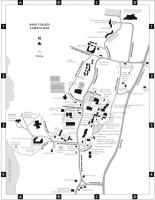
  • Bard College Campus Map

    Bard Campus Map

    Campus Map


  • Academic Resources Center (Stone Row) C3
  • Administrative Offices (Ludlow) C3
  • Admission (Hopson Cottage) B3
  • Albee Hall (Bard Music Festival) C3
  • Alumni Houses (residence halls) Bluecher, Bourne, Honey, Leonard, Obreshkove, Rovere, Rueger, Shafe [...]
  •  

    Travel to Bard

    Travel to Bard


    Bard College is inAnnandale-on-Hudson, New York, on the east bank of the Hudson River, about 90miles north of New York City and 220 miles southwest of Boston. By train: Amtrak provides service fromPenn Station, New York City, and from Albany to Rhinecliff, about 9 miles southof Annandale. Taxi &s [...]