Cultura y noticias hispanas del Valle del Hudson
The Rasuwa Disaster in Nepal
Por Viviana Ramos-Myatt
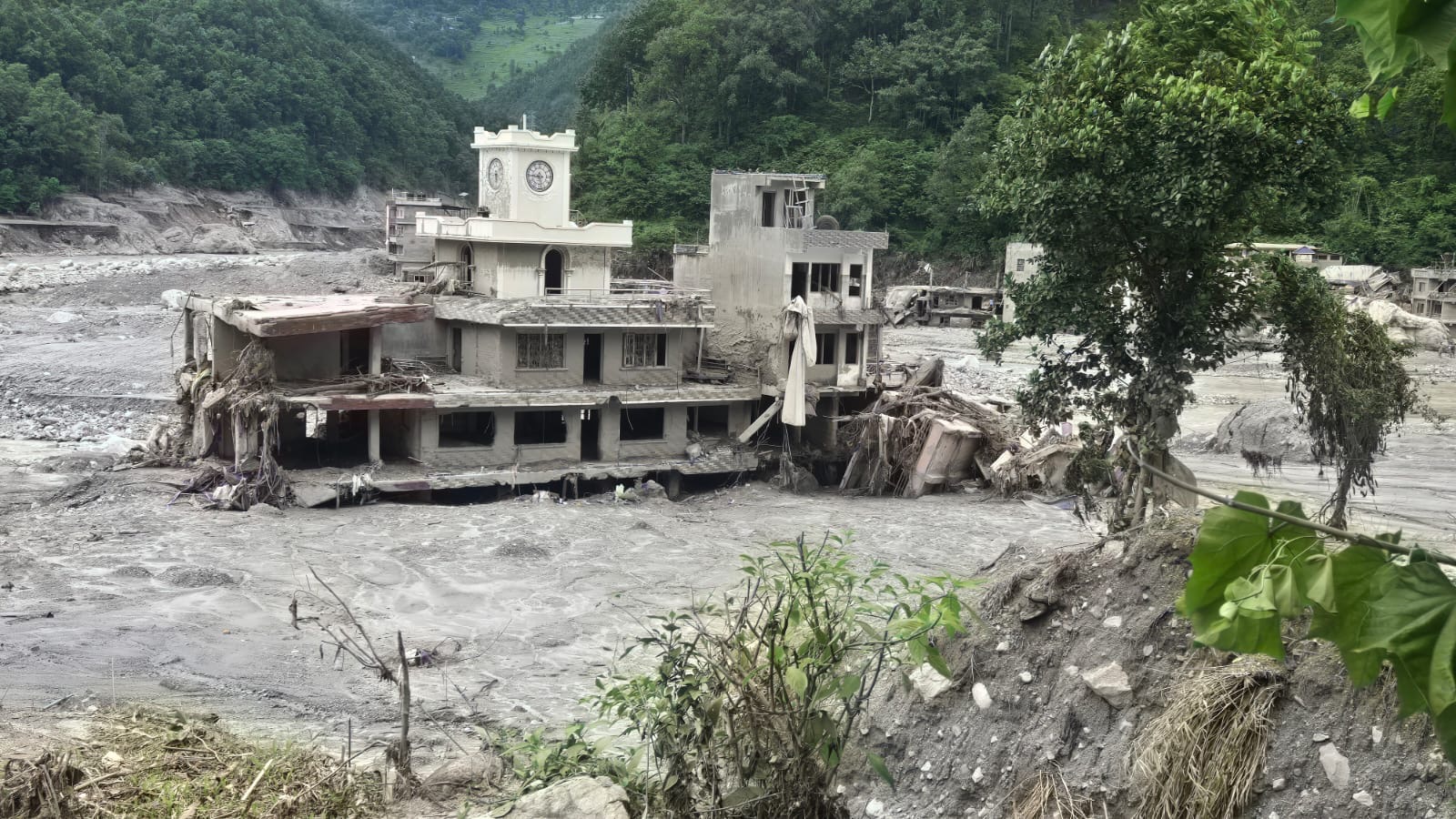
October 2026 At the end of August, an avalanche of ice and rock in the Himalayan region triggered a devastating flood that affected communities, infrastructure, and trade routes in Nepal and China. Although the disaster was concentrated in a specific corridor, its consequences have raised questions that extend far beyond the communities directly affected.
The shocking images of the event offer a frightening representation of human vulnerability in the face of a powerful geological hazard. Although the event was several orders of magnitude smaller in terms of geographic extent and loss of human life, it was arguably as striking as the December 2004 Indian Ocean tsunami.
At a Bard College meeting held as part of a current-events series, Nepalese glacial hydrologist Tenzing Chogyal Sherpa, a doctoral candidate at Utrecht University and founding member of the Cryosphere Society of Nepal, spoke about the causes, consequences, and possible lessons of the disaster.
Sherpa explained that the disaster began with an avalanche of ice and rock descending from a high-altitude area. As it fell, the material picked up more ice, rocks, soil, and sediment as it moved, increasing its volume and destructive power. The result was an enormous amount of water, mud, and debris that moved through river corridors and affected several communities.
The affected areas included the districts of Rasuwa, Nuwakot, Gorkha, Dhading, Chitwan, and Nawalparasi. Some communities were severely damaged. Syabrubesi, for example, suffered extensive damage, while other areas were practically wiped out. The United Nations estimates that approximately 10,000 homes were swept away by the floods.
The human impact remained evident one month after the disaster. According to the United Nations’ most recent emergency report, 1,453 people had died and another 5,644 remained missing as of September 23. A total of 13,795 people had been rescued. At that time, 1,112 people remained in 21 displacement centers.
Displacement began during the first days of the flooding. An assessment by the International Organization for Migration conducted between August 27 and 31 found that 4,288 households had been affected across 15 locations in the districts of Dhading, Nuwakot, and Rasuwa, with 2,886 households displaced. The impact has also been especially significant for children. More than 500 children were staying in shelters after their parents died or were reported missing, according to an Al Jazeera report published on September 22.
The disaster also affected bridges, roads, and hydroelectric power projects, an important part of Nepal’s economy and energy system. Sherpa explained that living and building along river corridors exposes communities not only to flooding, but also to multiple hazards that can occur at the same time.
The impact of the event continued after the waters receded. Sherpa noted that new lakes formed after the flooding and that concerns remain about the possibility of additional avalanches and movements of ice and rock.
The problem is particularly serious for Nepal because the country is mountainous and landlocked. Roads, bridges, communities, and hydroelectric projects have few options for where they can be located and are often concentrated near rivers. When one of these areas is destroyed, rebuilding is not as simple as replacing what was lost. It also raises the question of whether it should be rebuilt in the same location.
Was the Disaster Caused by Climate Change?
One of the main questions raised during the event was also one of the most difficult to answer.
Scientists still cannot say with certainty that climate change directly caused the specific collapse on August 26. However, warming temperatures in the region are changing glacier and ground conditions. Higher temperatures can increase glacier melt and affect permafrost, the ground that remains frozen for long periods of time and can help keep mountain slopes stable.
The Himalayas are changing, and those changes may increase the risk of future landslides, avalanches, and glacial floods. Sherpa noted that Nepal will continue to face natural-disaster risks as the climate continues to change.
The Question of Climate Justice
The government of Nepal estimates that the disaster caused approximately $1.8 billion in direct damage and another $883 million in losses. The official assessment estimates that approximately $4.78 billion will be needed for reconstruction.
To put this amount into context, Nepal’s gross domestic product (GDP) was approximately $45.49 billion in 2025, according to the World Bank. This means that the estimated $4.78 billion needed for reconstruction is equivalent to approximately 10.5% of the country’s entire annual economy.
The country’s economic situation is also important for understanding the impact of a reconstruction effort of this scale. The World Bank classifies Nepal as a lower-middle-income economy. For fiscal year 2026, this category includes countries with a gross national income per capita between $1,136 and $4,495. In Nepal, the World Bank records a gross national income per capita of approximately $1,470 in 2024.
Additionally, 20.3% of the population lived below the national poverty line according to the most recent available data, from 2022. The poverty rate measured using the international $3-per-day threshold was 2.44%. For this reason, one of the issues that emerged during the discussion was climate justice. Nepal contributes relatively little to global greenhouse gas emissions, yet it is facing some of the impacts of a warming climate. The Nepalese government has requested international assistance for recovery.
The discussion also touched on the United Nations Loss and Damage Fund, created to help vulnerable countries address losses and damages associated with climate change.
Rebuilding with the Next Disaster in Mind
Rather than simply replacing destroyed bridges, roads, and buildings, experts at the event raised the need to build more resilient infrastructure and avoid placing communities back in the same high-risk locations.
But relocating a community is not simple. People have historical and family ties to their homes and communities, while moving entire populations can be costly and difficult. Reconstruction therefore requires consideration of both natural hazards and the needs of the people who live in these areas.
Monitoring and warning systems would also need to be improved. Because rivers cross national borders, Sherpa emphasized the importance of sharing information among Nepal, China, and India and developing systems capable of monitoring multiple hazards at the same time.
The goal would not simply be to react when a flood occurs, but to identify risks before they become an emergency. COPYRIGHT 2026
La Voz, Cultura y noticias hispanas del Valle de Hudson
At a Bard College meeting held as part of a current-events series, Nepalese glacial hydrologist Tenzing Chogyal Sherpa, a doctoral candidate at Utrecht University and founding member of the Cryosphere Society of Nepal, spoke about the causes, consequences, and possible lessons of the disaster.
Sherpa explained that the disaster began with an avalanche of ice and rock descending from a high-altitude area. As it fell, the material picked up more ice, rocks, soil, and sediment as it moved, increasing its volume and destructive power. The result was an enormous amount of water, mud, and debris that moved through river corridors and affected several communities.
The affected areas included the districts of Rasuwa, Nuwakot, Gorkha, Dhading, Chitwan, and Nawalparasi. Some communities were severely damaged. Syabrubesi, for example, suffered extensive damage, while other areas were practically wiped out. The United Nations estimates that approximately 10,000 homes were swept away by the floods.
The human impact remained evident one month after the disaster. According to the United Nations’ most recent emergency report, 1,453 people had died and another 5,644 remained missing as of September 23. A total of 13,795 people had been rescued. At that time, 1,112 people remained in 21 displacement centers.
Displacement began during the first days of the flooding. An assessment by the International Organization for Migration conducted between August 27 and 31 found that 4,288 households had been affected across 15 locations in the districts of Dhading, Nuwakot, and Rasuwa, with 2,886 households displaced. The impact has also been especially significant for children. More than 500 children were staying in shelters after their parents died or were reported missing, according to an Al Jazeera report published on September 22.
The disaster also affected bridges, roads, and hydroelectric power projects, an important part of Nepal’s economy and energy system. Sherpa explained that living and building along river corridors exposes communities not only to flooding, but also to multiple hazards that can occur at the same time.
The impact of the event continued after the waters receded. Sherpa noted that new lakes formed after the flooding and that concerns remain about the possibility of additional avalanches and movements of ice and rock.
The problem is particularly serious for Nepal because the country is mountainous and landlocked. Roads, bridges, communities, and hydroelectric projects have few options for where they can be located and are often concentrated near rivers. When one of these areas is destroyed, rebuilding is not as simple as replacing what was lost. It also raises the question of whether it should be rebuilt in the same location.
Was the Disaster Caused by Climate Change?
One of the main questions raised during the event was also one of the most difficult to answer.
Scientists still cannot say with certainty that climate change directly caused the specific collapse on August 26. However, warming temperatures in the region are changing glacier and ground conditions. Higher temperatures can increase glacier melt and affect permafrost, the ground that remains frozen for long periods of time and can help keep mountain slopes stable.
The Himalayas are changing, and those changes may increase the risk of future landslides, avalanches, and glacial floods. Sherpa noted that Nepal will continue to face natural-disaster risks as the climate continues to change.
The Question of Climate Justice
The government of Nepal estimates that the disaster caused approximately $1.8 billion in direct damage and another $883 million in losses. The official assessment estimates that approximately $4.78 billion will be needed for reconstruction.
To put this amount into context, Nepal’s gross domestic product (GDP) was approximately $45.49 billion in 2025, according to the World Bank. This means that the estimated $4.78 billion needed for reconstruction is equivalent to approximately 10.5% of the country’s entire annual economy.
The country’s economic situation is also important for understanding the impact of a reconstruction effort of this scale. The World Bank classifies Nepal as a lower-middle-income economy. For fiscal year 2026, this category includes countries with a gross national income per capita between $1,136 and $4,495. In Nepal, the World Bank records a gross national income per capita of approximately $1,470 in 2024.
Additionally, 20.3% of the population lived below the national poverty line according to the most recent available data, from 2022. The poverty rate measured using the international $3-per-day threshold was 2.44%. For this reason, one of the issues that emerged during the discussion was climate justice. Nepal contributes relatively little to global greenhouse gas emissions, yet it is facing some of the impacts of a warming climate. The Nepalese government has requested international assistance for recovery.
The discussion also touched on the United Nations Loss and Damage Fund, created to help vulnerable countries address losses and damages associated with climate change.
Rebuilding with the Next Disaster in Mind
Rather than simply replacing destroyed bridges, roads, and buildings, experts at the event raised the need to build more resilient infrastructure and avoid placing communities back in the same high-risk locations.
But relocating a community is not simple. People have historical and family ties to their homes and communities, while moving entire populations can be costly and difficult. Reconstruction therefore requires consideration of both natural hazards and the needs of the people who live in these areas.
Monitoring and warning systems would also need to be improved. Because rivers cross national borders, Sherpa emphasized the importance of sharing information among Nepal, China, and India and developing systems capable of monitoring multiple hazards at the same time.
The goal would not simply be to react when a flood occurs, but to identify risks before they become an emergency. COPYRIGHT 2026
La Voz, Cultura y noticias hispanas del Valle de Hudson

Comments | |
| Sorry, there are no comments at this time. |