Cultura y noticias hispanas del Valle del Hudson
Brothers at Bard: The Home Many Never Had
Por Marcos Castilla
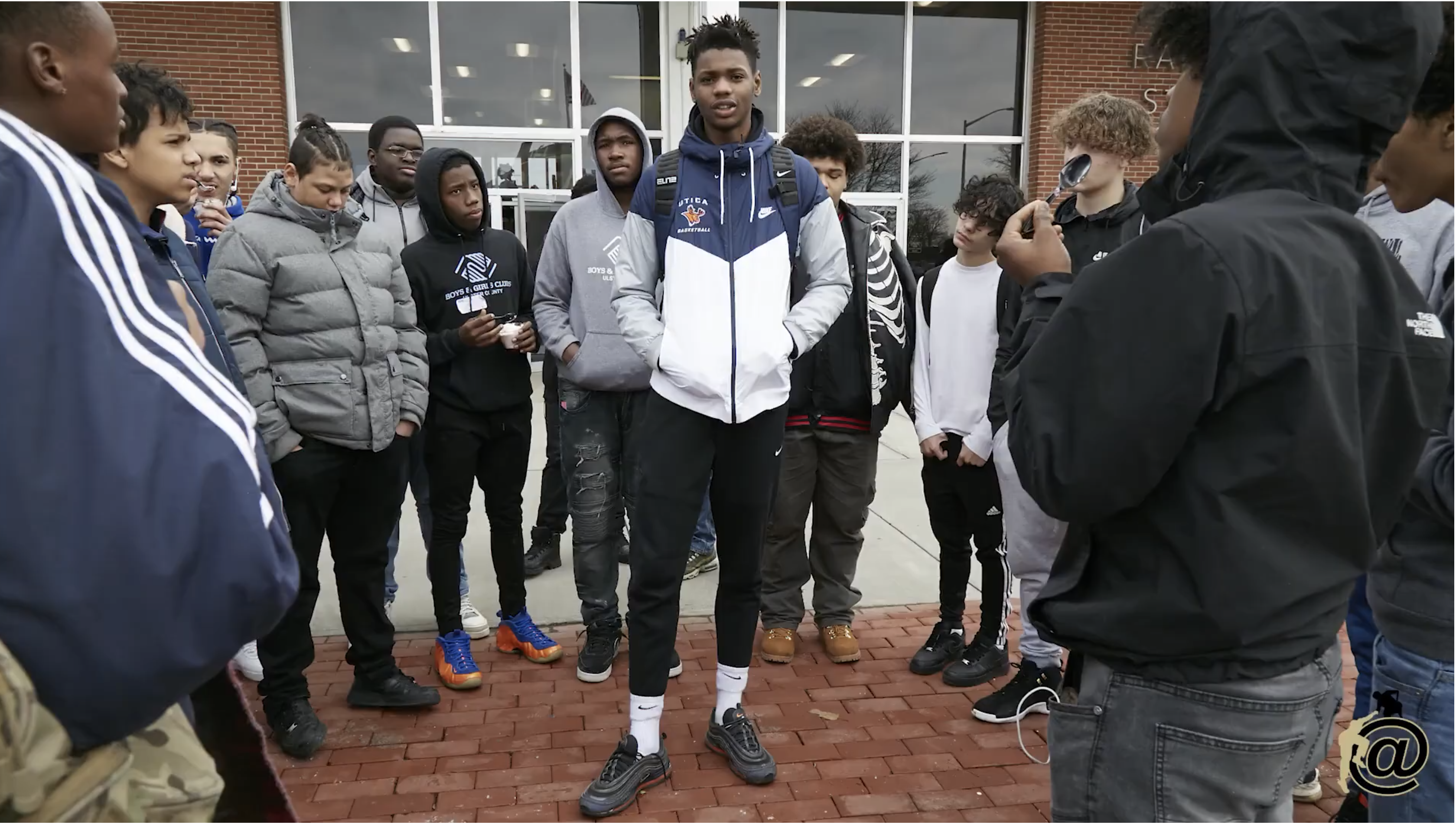
October 2026 During one of Brothers at Bard’s visits to Kingston High School, William “Will” Hernández and the other mentors brought pizza for the students. But before the young people could serve themselves, some of the mentors had already started eating, and Will had to step in. He reminded them that the food was for the students and that this was precisely why they were there. “Many of them don’t have food at home; they can only eat at school,” he explained. For Will, that was one of the moments when he realized that his responsibility within the program went beyond being another college student. “I had to stand up and be more than a mentor, an adult.”
Not every space exists when you arrive at college. Some have to be created. At Bard College, between classes, there is a constant feeling of wanting to fit in. Brothers at Bard grew out of that need and has become an enormous source of support for many people.
It all began in 2014, when Dariel Vasquez, then a Bard student, was struggling to find his place at the college and noticed that other students were experiencing similar difficulties during the transition to college life. Vasquez created a support group on campus for men of color, with conversation circles, peer mentoring, and cultural activities. A year later, together with Harry Johnson, he took that experience beyond Bard and launched Brothers@ at Kingston High School.
The founders, Dariel Vasquez and Harry Johnson, built the foundations of this brotherhood through their own personal experiences. They wanted to create an environment that would be sustainable for themselves within the college. A space where they would not have to constantly explain themselves, where identity would not be a barrier, and where college life could be experienced with a sense of belonging.
At Kingston High School, the idea was to create a safe space where Black and Afro-Latino young people could talk about their experiences with Black and Afro-Latino college students from Bard who had stories similar to their own. This is what Brothers@ calls near-peer mentoring, in which college students become role models for high school students. For Brothers@, this closeness allows students to see themselves reflected in their mentors and be inspired to one day occupy a similar place.
What began as a club gradually took shape until it became something larger. Brothers at Bard became more than just a meeting place, transforming into an organization committed to supporting Black and Afro-Latino male students both on and off the college campus.
In 2016, Brothers@ and Kingston High School created the GrindTime Center, held twice a week during ninth period. It is a space where students meet with their mentors, receive help with homework and college applications, access school supplies, or simply talk about their lives. Over time, the program also incorporated social-emotional learning sessions and Brothers Reading Together, a reading circle designed to encourage dialogue and connection with culturally relevant texts.
The Brothers@ method is called Our Space, in which young people actively participate in creating the conversations and activities. Sessions are organized around circles of brotherhood, discussion, and reflection on shared experiences. For Brothers@, the answers are already in the room, and the mentors’ role is to help students find them.
William “Will” Hernández arrived at Bard College in 2023 at the age of 18, intending to study Computer Science. It was his first time leaving Georgia, and he did not know anyone in New York. “I was scared,” he recalls. He also was not sure what he wanted to do after college or how Computer Science would fit into his plans.
His entry into Brothers at Bard came through AZ and Heston, former program leaders and members of the men’s basketball team, whom he knew through their work with Bard Athletics. They approached Will and Jalen Smiley to ask whether they wanted to take on responsibilities within the program and continue the mentoring work. When Will began, Brothers at Bard had around four mentors. With Will and Jalen leading, the group expanded to nearly 15. Part of their work involves traveling to Kingston High School to work directly with the boys.
During his first year, the sessions focused on life lessons, from talking about everyday matters to explaining how to apply to college. The following year, they modified part of the program. They kept sessions about everyday life but added reading sessions in which mentors and students chose a book and read it together, as well as days dedicated to exploring different careers. Mentors asked students what they wanted to do in the future and, based on their answers, could organize a session around a specific profession.
Will explains that this allowed them to support the student who had expressed an interest while also introducing new possibilities to the rest of the group. Brothers@ organizes college visits so students can enter classrooms and dormitories and share a meal with their college mentors. For many, these visits are the first time they have ever set foot on a college campus. However, the intention was not to present college as the only path. Other forms of education and career opportunities were also discussed. The activities were not limited to Kingston High School. On one of the trips organized by the program, Will and the students took a bus to New York City to visit MoMA, the Museum of Modern Art. They then explored part of the city in small groups and ended the day at Dave & Buster’s. For Will, these kinds of activities were part of a relationship that developed throughout his years in the program and eventually became more than mentorship: it became a friendship.
That relationship also ended up influencing his own plans. Will began at Bard intending to study Computer Science, but now, in his fourth and final academic year, he has chosen Psychology with a concentration in Data Analytics and wants to work with children.
He directly connects that change to the time he has spent with the students at Kingston High School. “I’ve been with them for almost four years,” he explained. During that time, he has watched them grow and mature year after year. “I’m not sure if I influenced them, but I can say with certainty that they influenced me and who I am now.”
One of the program’s main obstacles, Will says, has been coordinating the mentors’ schedules and the amount of time they can spend with the students. Because they are Bard students with different academic schedules and other responsibilities, not everyone could participate on the same days. If he could change something, he says, it would be to increase the number of mentoring days. Having more mentors helped expand the program, but it did not completely solve the challenge of finding times when they could consistently be present.
For many students, visiting a college, participating in a retreat, or simply having a conversation with someone who has traveled a similar path can redefine the boundaries of what is and is not possible for them, because what started at Bard no longer stays at Bard.
Over time, Brothers at Bard has expanded to other institutions such as Vassar College and is part of the Brothers@ Consortium in Higher Education. The organization went from being a project started by Bard students to developing a model that seeks to establish programs on other campuses and in other communities. Its website currently lists initiatives at Kingston High School, Bard College, Vassar College, national programs, and collaborations with other institutions. This expansion reflects both organizational growth and a broader need: creating support networks that extend beyond a single campus.
Will does not know how much he has changed the lives of the young people he has worked with, but he does know that they changed the direction of his own.
According to information published on its website, Brothers@ works with 50 Kingston High School students each year. For more information at brothersat.org COPYRIGHT 2026
La Voz, Cultura y noticias hispanas del Valle de Hudson
It all began in 2014, when Dariel Vasquez, then a Bard student, was struggling to find his place at the college and noticed that other students were experiencing similar difficulties during the transition to college life. Vasquez created a support group on campus for men of color, with conversation circles, peer mentoring, and cultural activities. A year later, together with Harry Johnson, he took that experience beyond Bard and launched Brothers@ at Kingston High School.
The founders, Dariel Vasquez and Harry Johnson, built the foundations of this brotherhood through their own personal experiences. They wanted to create an environment that would be sustainable for themselves within the college. A space where they would not have to constantly explain themselves, where identity would not be a barrier, and where college life could be experienced with a sense of belonging.
At Kingston High School, the idea was to create a safe space where Black and Afro-Latino young people could talk about their experiences with Black and Afro-Latino college students from Bard who had stories similar to their own. This is what Brothers@ calls near-peer mentoring, in which college students become role models for high school students. For Brothers@, this closeness allows students to see themselves reflected in their mentors and be inspired to one day occupy a similar place.
What began as a club gradually took shape until it became something larger. Brothers at Bard became more than just a meeting place, transforming into an organization committed to supporting Black and Afro-Latino male students both on and off the college campus.
In 2016, Brothers@ and Kingston High School created the GrindTime Center, held twice a week during ninth period. It is a space where students meet with their mentors, receive help with homework and college applications, access school supplies, or simply talk about their lives. Over time, the program also incorporated social-emotional learning sessions and Brothers Reading Together, a reading circle designed to encourage dialogue and connection with culturally relevant texts.
The Brothers@ method is called Our Space, in which young people actively participate in creating the conversations and activities. Sessions are organized around circles of brotherhood, discussion, and reflection on shared experiences. For Brothers@, the answers are already in the room, and the mentors’ role is to help students find them.
William “Will” Hernández arrived at Bard College in 2023 at the age of 18, intending to study Computer Science. It was his first time leaving Georgia, and he did not know anyone in New York. “I was scared,” he recalls. He also was not sure what he wanted to do after college or how Computer Science would fit into his plans.
His entry into Brothers at Bard came through AZ and Heston, former program leaders and members of the men’s basketball team, whom he knew through their work with Bard Athletics. They approached Will and Jalen Smiley to ask whether they wanted to take on responsibilities within the program and continue the mentoring work. When Will began, Brothers at Bard had around four mentors. With Will and Jalen leading, the group expanded to nearly 15. Part of their work involves traveling to Kingston High School to work directly with the boys.
During his first year, the sessions focused on life lessons, from talking about everyday matters to explaining how to apply to college. The following year, they modified part of the program. They kept sessions about everyday life but added reading sessions in which mentors and students chose a book and read it together, as well as days dedicated to exploring different careers. Mentors asked students what they wanted to do in the future and, based on their answers, could organize a session around a specific profession.
Will explains that this allowed them to support the student who had expressed an interest while also introducing new possibilities to the rest of the group. Brothers@ organizes college visits so students can enter classrooms and dormitories and share a meal with their college mentors. For many, these visits are the first time they have ever set foot on a college campus. However, the intention was not to present college as the only path. Other forms of education and career opportunities were also discussed. The activities were not limited to Kingston High School. On one of the trips organized by the program, Will and the students took a bus to New York City to visit MoMA, the Museum of Modern Art. They then explored part of the city in small groups and ended the day at Dave & Buster’s. For Will, these kinds of activities were part of a relationship that developed throughout his years in the program and eventually became more than mentorship: it became a friendship.
That relationship also ended up influencing his own plans. Will began at Bard intending to study Computer Science, but now, in his fourth and final academic year, he has chosen Psychology with a concentration in Data Analytics and wants to work with children.
He directly connects that change to the time he has spent with the students at Kingston High School. “I’ve been with them for almost four years,” he explained. During that time, he has watched them grow and mature year after year. “I’m not sure if I influenced them, but I can say with certainty that they influenced me and who I am now.”
One of the program’s main obstacles, Will says, has been coordinating the mentors’ schedules and the amount of time they can spend with the students. Because they are Bard students with different academic schedules and other responsibilities, not everyone could participate on the same days. If he could change something, he says, it would be to increase the number of mentoring days. Having more mentors helped expand the program, but it did not completely solve the challenge of finding times when they could consistently be present.
For many students, visiting a college, participating in a retreat, or simply having a conversation with someone who has traveled a similar path can redefine the boundaries of what is and is not possible for them, because what started at Bard no longer stays at Bard.
Over time, Brothers at Bard has expanded to other institutions such as Vassar College and is part of the Brothers@ Consortium in Higher Education. The organization went from being a project started by Bard students to developing a model that seeks to establish programs on other campuses and in other communities. Its website currently lists initiatives at Kingston High School, Bard College, Vassar College, national programs, and collaborations with other institutions. This expansion reflects both organizational growth and a broader need: creating support networks that extend beyond a single campus.
Will does not know how much he has changed the lives of the young people he has worked with, but he does know that they changed the direction of his own.
According to information published on its website, Brothers@ works with 50 Kingston High School students each year. For more information at brothersat.org COPYRIGHT 2026
La Voz, Cultura y noticias hispanas del Valle de Hudson
Comments | |
| Sorry, there are no comments at this time. |