Cultura y noticias hispanas del Valle del Hudson
Usos y costumbres
Framing Equality
What the fight for gay marriage teaches us about the politics of fear
Por Adriana P Parada Campos
June 2026 “In this country there is a need for the Right to create an enemy, to create a new threat”, explained Omar Encarnación, politics professor at Bard College, during a recent talk on his new book Framing Equality: The Politics of Gay Marriage Wars (Oxford University Press, 2025). “No other country has created this type of law, or demonstrated such an adverse reaction”, he added. And he´s not exaggerating.
The talk given by Professor Encarnación shows that the US isn´t the center of the world in terms of LGBTQ rights, rather its conservative reaction serves as an atypical case. While countries like Spain and Brazil have advanced, here what was construed was a “moral panic” that today, with the return of Trump, has begun again to threaten minorities.
25 years ago, the Netherlands became the first country to legalize marriage for all (in 2001), today 41 nations have taken this step, according to a recent report from the Pew Research Center. But the journey hasn´t always been smooth. Spain achieved it in 2005, the third country in the world to do so, Brazil in 2013, and the US more recently in 2015 with Obergefell v. Hodges.
In his book Encarnación analyzes three key cases: Spain, the United States and Brazil. And he finds something surprising: the ferocity of conservative reactions isn´t only dependent on preexisting levels of homophobia, but also how activists “framed” their fight.
In Spain, coming out of Franco´s dictatorship which brutally repressed any kind of sexual dissidence, activists opted for an approach that Encarnación calls “ethical citizenship”. They didn´t ask for scraps. They fought for marriage equality on the same level as heterosexuals, without creating distinctions for themselves. “We fought for what we believed we deserved”, said a Spanish activist quoted by Encarnación. Despite the opposition of the Catholic Church, the negative reaction on the street was minimal.
In Brazil, however, the strategy was incremental. LGBTQ movements first achieved the government´s recognition of cohabitation for same-sex couples (key in a country in which marriage was a luxury of the rich). Once this union was normalized, marriage for all seemed to come naturally. Encarnación emphasized further that Brazil didn’t develop a legal structure against marriage equality as extensive as that in the US. As Encarnación explained, the primary opposition was Evangelicals. According to Encarnación, countries with a larger proportion of Evangelicals tend to hold more conservative views when it comes to homosexuality, as opposed to those with a larger proportion of Catholics (such as Spain or Brazil).
But the case of the United States stands out as extreme. Here there was “moral panic”. Here there have been campaigns like “Save the Children” in Florida, the Defense of Marriage Act, DOMA, in 1996, and Proposition 8 in California, which legalized and then suspended gay marriage, leaving thousands in limbo. “Only in this country would we entertain this level of aversion”, Encarnación emphasized.
The trap of winning the legal battle and losing the cultural one
One of the most provocative points of Encarnación’s book is that activists in the US won the right to marriage, but for it they paid a high price. “They reached their goal and then closed the door”, says Encarnación. They didn´t confront the prejudice in the background. They didn´t play the morality game. They were short sighted.
And now, with a conservative Supreme Court and a second Trump Administration that has already shown its disposition for turning back rights, the worry grows; if Obergefell were to be annulled, marriage equality could go back being determined on a state-by-state basis.
What would happen in New York?
There’s an important fact: New York has its own statewide protection. The Marriage Equality Act, signed in 2011, establishes that marriage licenses should be authorized regardless of whether the marriage is between people of the same or different sexes; that a valid marriage will continue to be valid regardless of the sex of those getting married; and that no civil right, benefit, protection or responsibility of marriage can be different if pertaining to a same-sex couple.
This means that, even if the federal Supreme Court overturned Obergefell, New York would continue recognizing and celebrating same-sex marriage according to state law. Furthermore, at a federal level, the Respect for Marriage Act of 2022 requires that all states recognize valid marriages from other states for the purposes of federal law. Regardless, this federal law does not require all states to give out marriage licenses to same-sex couples if Obergefell were to disappear.
Why is this important for everyone?
Encarnación responds to a key question: does culture affect social movements? And he says yes, but not in the way that we would think. In societies that lived through extreme repression (like in Francoist Spain), people learned to dream of a better future because they didn’t have anything to lose. In the US, where civil rights were accumulated little by little, institutions and activists were scared to lose what they had already won. Because of this they focused on the legal aspect, not on the cultural aspect. Today, 25 years after the Netherlands, the fight for LGBTQ equality isn’t over. In many countries in the world marriage equality is still illegal. And in countries like the US, the threat of backsliding is real.
But this also leaves a lesson: the most successful social movements didn’t only change laws, they also changed conversations. The cases of Spain and Brazil (and not the US) are, in this respect, true laboratories for the future.
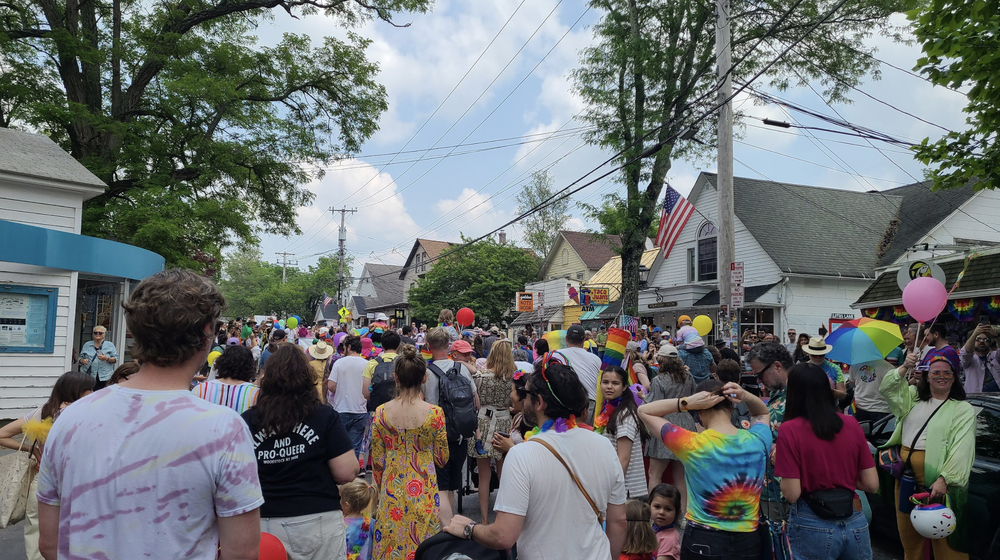
The Dutchess County Pride Center will hold the 8th Edition of the biggest pride march and festival in the Mid-Hudson Valley, focused on celebrating diversity and community. The main celebration will take place Saturday June 13th from 12pm until 4pm, beginning with a parade through the main streets and ending by the banks of the Hudson River. The festival activities will take place in Victor C. Waryas Park in Poughkeepsie, New York. The event will have vendors, food trucks, info booths and free live music. More information: dutchesspride.org/poughkeepsie-pride.
Dutchess Pride’s programming will also include Pride Night with the Hudson Valley Renegades on June 10th, a free event at Bardavon on June 26th and a Pride Fun Run 5K on June 28th.
In Hudson, OutHudson Pride will take place Saturday June 20th with its parade starting at 2pm at 7th Street Park towards Warren Street, as part of the weekend’s activities from June 19th through the 21st. For more information visit: iloveny.com/event/outhudson-pride/79458/
Safe Harbors of the Hudson invites you to celebrate Pride Month at their annual Pride on the Green. This free family-friendly event will take place Sunday June 21st at Safe Harbors Green, located at 111 Broadway in Newburgh, New York. The festivities will begin at 11:30am with a group route from Newburgh Brewing Company towards the park. Starting at noon, attendees will enjoy performances on the main stage, live music from local DJs, Drag Storytime for Kids and an open-air dance party. More information: safe-harbors.org/events/pride-on-the-green-2026
There will also be concerts by Key of Q, the LGBTQ+ chorus of the Hudson Valley, in Kingston on June 6th, in Newburgh on June 7th, in Beacon on June 19th and in New Paltz on June 20th. For more information visit: keyofq.org/
*Translated from Spanish by Lucy Waldorf
COPYRIGHT 2026
La Voz, Cultura y noticias hispanas del Valle de Hudson
25 years ago, the Netherlands became the first country to legalize marriage for all (in 2001), today 41 nations have taken this step, according to a recent report from the Pew Research Center. But the journey hasn´t always been smooth. Spain achieved it in 2005, the third country in the world to do so, Brazil in 2013, and the US more recently in 2015 with Obergefell v. Hodges.
In his book Encarnación analyzes three key cases: Spain, the United States and Brazil. And he finds something surprising: the ferocity of conservative reactions isn´t only dependent on preexisting levels of homophobia, but also how activists “framed” their fight.
In Spain, coming out of Franco´s dictatorship which brutally repressed any kind of sexual dissidence, activists opted for an approach that Encarnación calls “ethical citizenship”. They didn´t ask for scraps. They fought for marriage equality on the same level as heterosexuals, without creating distinctions for themselves. “We fought for what we believed we deserved”, said a Spanish activist quoted by Encarnación. Despite the opposition of the Catholic Church, the negative reaction on the street was minimal.
In Brazil, however, the strategy was incremental. LGBTQ movements first achieved the government´s recognition of cohabitation for same-sex couples (key in a country in which marriage was a luxury of the rich). Once this union was normalized, marriage for all seemed to come naturally. Encarnación emphasized further that Brazil didn’t develop a legal structure against marriage equality as extensive as that in the US. As Encarnación explained, the primary opposition was Evangelicals. According to Encarnación, countries with a larger proportion of Evangelicals tend to hold more conservative views when it comes to homosexuality, as opposed to those with a larger proportion of Catholics (such as Spain or Brazil).
But the case of the United States stands out as extreme. Here there was “moral panic”. Here there have been campaigns like “Save the Children” in Florida, the Defense of Marriage Act, DOMA, in 1996, and Proposition 8 in California, which legalized and then suspended gay marriage, leaving thousands in limbo. “Only in this country would we entertain this level of aversion”, Encarnación emphasized.
The trap of winning the legal battle and losing the cultural one
One of the most provocative points of Encarnación’s book is that activists in the US won the right to marriage, but for it they paid a high price. “They reached their goal and then closed the door”, says Encarnación. They didn´t confront the prejudice in the background. They didn´t play the morality game. They were short sighted.
And now, with a conservative Supreme Court and a second Trump Administration that has already shown its disposition for turning back rights, the worry grows; if Obergefell were to be annulled, marriage equality could go back being determined on a state-by-state basis.
What would happen in New York?
There’s an important fact: New York has its own statewide protection. The Marriage Equality Act, signed in 2011, establishes that marriage licenses should be authorized regardless of whether the marriage is between people of the same or different sexes; that a valid marriage will continue to be valid regardless of the sex of those getting married; and that no civil right, benefit, protection or responsibility of marriage can be different if pertaining to a same-sex couple.
This means that, even if the federal Supreme Court overturned Obergefell, New York would continue recognizing and celebrating same-sex marriage according to state law. Furthermore, at a federal level, the Respect for Marriage Act of 2022 requires that all states recognize valid marriages from other states for the purposes of federal law. Regardless, this federal law does not require all states to give out marriage licenses to same-sex couples if Obergefell were to disappear.
Why is this important for everyone?
Encarnación responds to a key question: does culture affect social movements? And he says yes, but not in the way that we would think. In societies that lived through extreme repression (like in Francoist Spain), people learned to dream of a better future because they didn’t have anything to lose. In the US, where civil rights were accumulated little by little, institutions and activists were scared to lose what they had already won. Because of this they focused on the legal aspect, not on the cultural aspect. Today, 25 years after the Netherlands, the fight for LGBTQ equality isn’t over. In many countries in the world marriage equality is still illegal. And in countries like the US, the threat of backsliding is real.
But this also leaves a lesson: the most successful social movements didn’t only change laws, they also changed conversations. The cases of Spain and Brazil (and not the US) are, in this respect, true laboratories for the future.
Pride Month in the Hudson Valley
By Elisvanell CelisThe Dutchess County Pride Center will hold the 8th Edition of the biggest pride march and festival in the Mid-Hudson Valley, focused on celebrating diversity and community. The main celebration will take place Saturday June 13th from 12pm until 4pm, beginning with a parade through the main streets and ending by the banks of the Hudson River. The festival activities will take place in Victor C. Waryas Park in Poughkeepsie, New York. The event will have vendors, food trucks, info booths and free live music. More information: dutchesspride.org/poughkeepsie-pride.
Dutchess Pride’s programming will also include Pride Night with the Hudson Valley Renegades on June 10th, a free event at Bardavon on June 26th and a Pride Fun Run 5K on June 28th.
In Hudson, OutHudson Pride will take place Saturday June 20th with its parade starting at 2pm at 7th Street Park towards Warren Street, as part of the weekend’s activities from June 19th through the 21st. For more information visit: iloveny.com/event/outhudson-pride/79458/
Safe Harbors of the Hudson invites you to celebrate Pride Month at their annual Pride on the Green. This free family-friendly event will take place Sunday June 21st at Safe Harbors Green, located at 111 Broadway in Newburgh, New York. The festivities will begin at 11:30am with a group route from Newburgh Brewing Company towards the park. Starting at noon, attendees will enjoy performances on the main stage, live music from local DJs, Drag Storytime for Kids and an open-air dance party. More information: safe-harbors.org/events/pride-on-the-green-2026
There will also be concerts by Key of Q, the LGBTQ+ chorus of the Hudson Valley, in Kingston on June 6th, in Newburgh on June 7th, in Beacon on June 19th and in New Paltz on June 20th. For more information visit: keyofq.org/
*Translated from Spanish by Lucy Waldorf
COPYRIGHT 2026
La Voz, Cultura y noticias hispanas del Valle de Hudson
Comments | |
| Sorry, there are no comments at this time. |