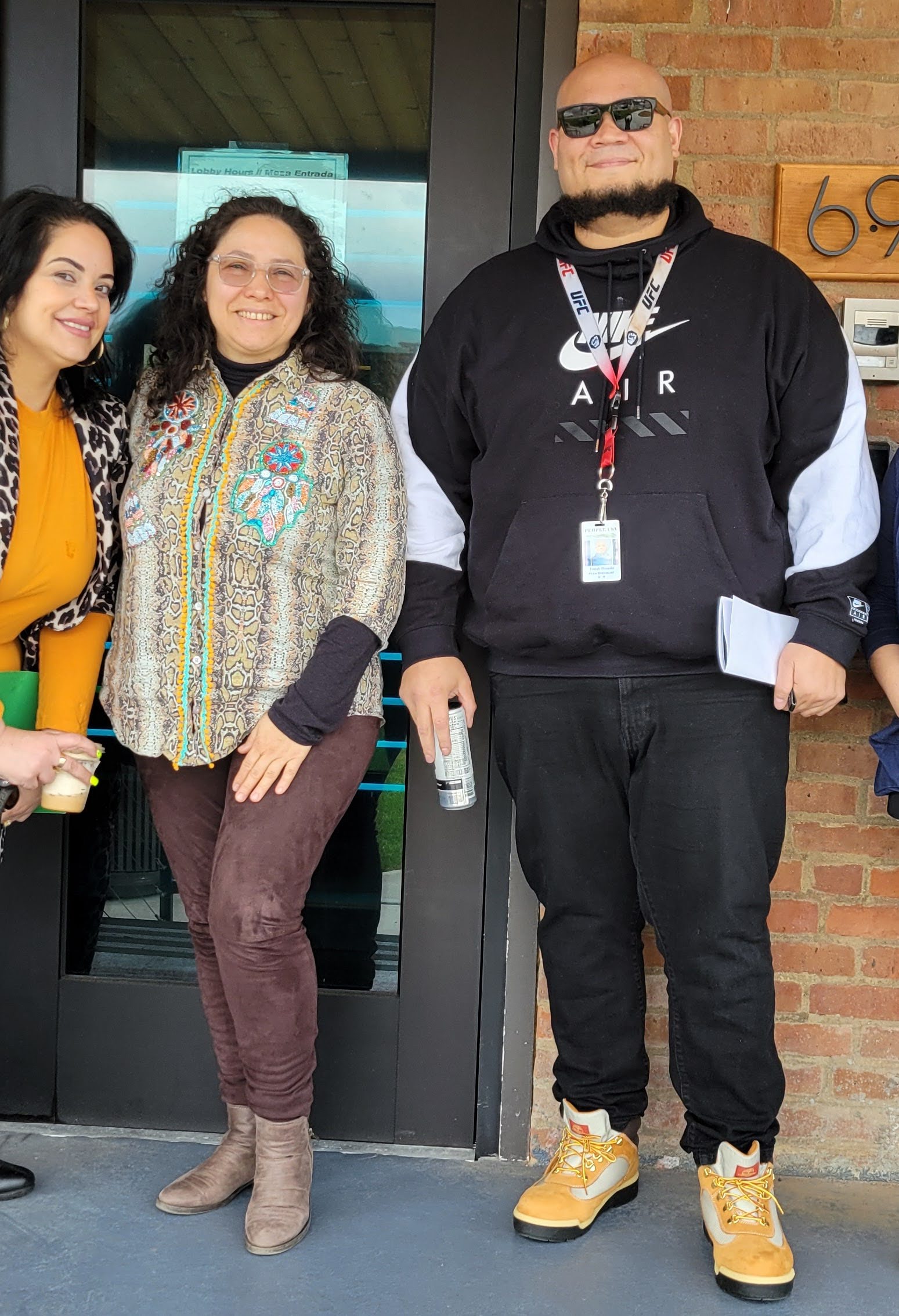
Isiah Rosado was born and raised in Sunset Park, Brooklyn, into a profoundly religious Puerto Rican family. His parents were Pentecostal preachers and he remembers having been especially close with his father, who he considered his best friend.
Years of violence and incarcerationAfter the death of his father, Rosado became involved in gangs and started selling drugs. For more than a decade, between adolescence and young adulthood, he was deep in an environment of violence that didn’t seem to have an exit. The spiral of violence ended up sending him to prison. He was charged with attempted murder and spent three years incarcerated, an experience that had him directly confront the consequences of the path he had chosen.
The experience confronted him with the reality that, as the story goes, he couldn’t forget. “I saw assaults, attempted murder and on one occasion a murder”, he said. “When people see that as something normal, there’s a problem”.
Regardless, even years after leaving prison, he admits that he still hadn’t changed. He kept getting into fights and other conflicts. But something else was about to happen to change his life forever.
The turning point came as suddenly as it did violently. Rosado was close to the door to his Brooklyn apartment when he left to look for water. Seconds after, the shooting started. The bullets flew past where had just been moments before. “If I hadn’t moved, that would’ve been me”, he remembered.
During the shooting two close friends died right in front of his eyes. At the same time, I was about to become a father. Seeing his Friends die and seeing his son made him confront a question that he’d been avoiding for years: what kind of life he wanted to create for himself.
“When I saw those friends who I’d been raised in the tomb with, that was what made me change”, he recalled. For the first time he understood that, if he had followed the same path, he probably wouldn’t get a second chance.
A New Life in the Hudson ValleyLooking to get away from the violence for good, Rosado decided to leave Brooklyn. Originally, he thought about moving to Florida but a visit to Kingston changed his mind. The woman that would eventually become his wife lived there. She helped him find work and start over.
His first job was in construction. Later on, he started working with kids at Children’s Home of Kingston, an experience that gave him a new sense of purpose. Little by little, he made a new life for himself. He made a family, had his second child and found stability in a community that was very different from the one he had left behind.
“I liked life here”, he explained. Today, in looking back he recognizes that he survived situations that easily could have ended his life. “There are days where I tell myself that I’m not supposed to be here”, he reflected.
Currently Rosado works as a peer support specialist at the Ulster County Crisis Support Center. He works alongside medical and mental health professionals and accompanies people as they’re going through difficult moments using a not-so-conventional tool: his own experience.
In the peer support model, those who provide assistance have lived through situations similar to those of the people looking for help, whether it be addiction, incarceration, trauma or mental health.
For Rosado, this shared experience allows him to connect especially to young people who are enticed by gang life or feel like they have no other choice. “Many of them see life differently after I tell them my story”, he affirmed.
The mission that drives his current work was born out of the mistakes and pain that marked his past. “If I can help anyone I’ll do it, that’s what I’m doing right now”.
Isaiah and his new mission in KingstonRosado is part for the team at the Ulster County Crisis Center, located at 368 Broadway in Kingston. In his role as a peer support specialist, he accompanies people through difficult moments using his own experience, offering to listen, provide support and guidance in the middle of crisis situations.
For Rosado, the importance of the center is based on something simple: offering others the help that he needed when he was young and didn’t know where to find. He noted that the service provided is free and open to everyone, regardless of medical coverage, documentation or immigration status. “No one is denied care”, he emphasized.
Isaiah remembers that for years he was looking for answers in the streets, through violence and gangs. Today, in change, he tries to offer to others what he himself needed in that time in his life: someone open to listening without judgement. “If I can help anyone, I’ll do it”, he said. “That’s what I’m doing now”.
Isiah Rosado’s journey invokes one of the most profound ideas of the American Dream: the possibility to transform yourself no matter your past. In Kingston, his work demonstrates that even in a path marked by loss and violence it’s possible to change, to be guided by support, purpose and second chances.
Ulster County Crisis Center The Ulster County Crisis Center operates as a space for immediate access to care for people experiencing emergencies related to mental health, substance use, trauma, violence or housing insecurity. Located at 368 Broadway in Kingston, the center is open 24 hours a day and offers free care regardless of insurance coverage, identification or documentation. Children and adults who experience emotional distress, mental health issues, substance use issues or other stressors can receive care and confidential help at the center for up to 24 hours. The center is operated by People USA, a non-profit organization with more than 35 years of experience in New York State. Funded and directed by those with lived experience in restorative processes, the organization helps children, adults, families and veterans in seven counties through an extensive network of services that include stabilization in crisis, peer support, housing assistance, a crisis hotline, community programs and help finding jobs, benefits and care. The center’s model is based in interdisciplinary work from a team of mental health professionals, nurses, community resource specialists and peer support specialists. Peer support specialists play an important role in accompanying people through crisis using their own lived experience, with similar life experience they offer a space for listening and understanding. Beyond the initial intervention, the center also develops plans to follow-up and connects people with housing, health, rehabilitation and social support services, with the objective of sustaining everyone even after the immediate crisis. |
*Translated from Spanish by Lucy Waldorf
back to top
COPYRIGHT 2026
La Voz, Cultura y noticias hispanas del Valle de Hudson